Technology
27
Aug . 2025
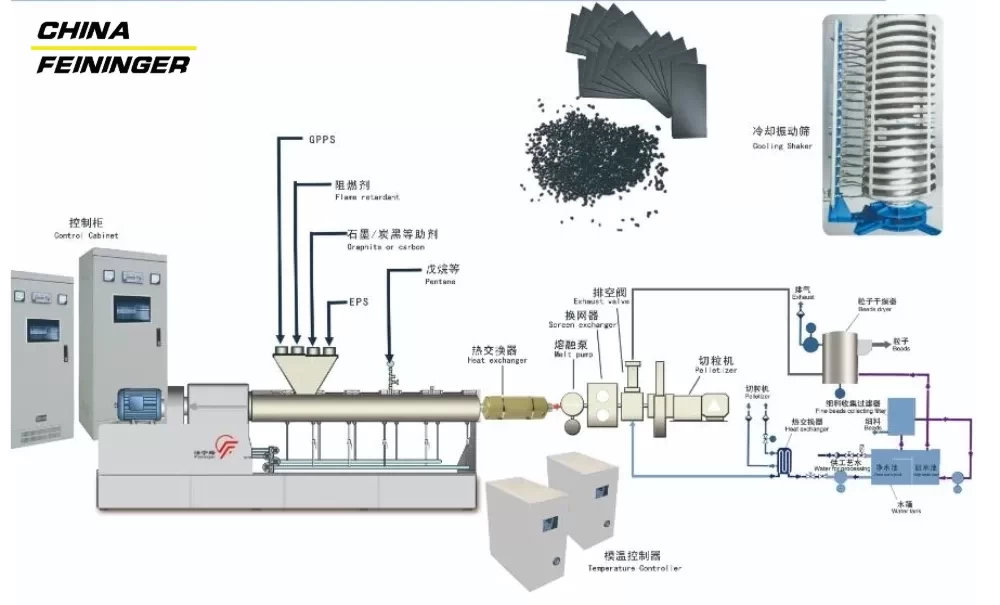
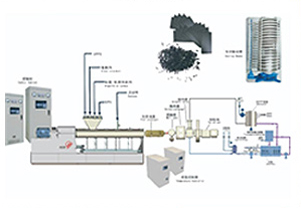
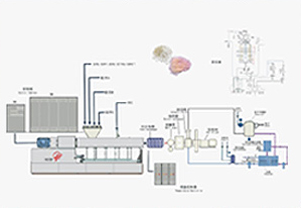
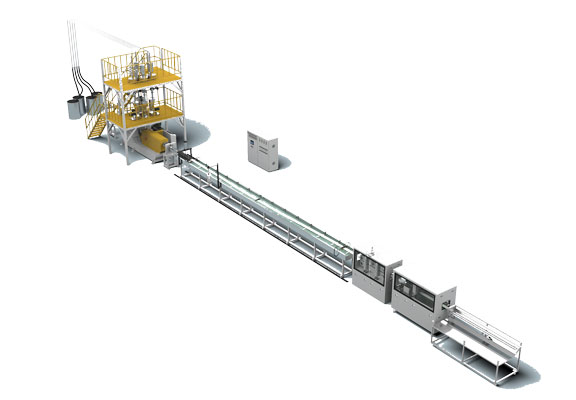
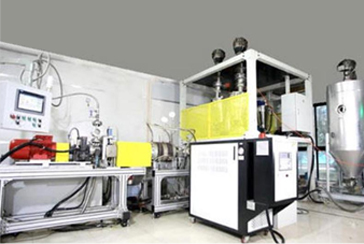
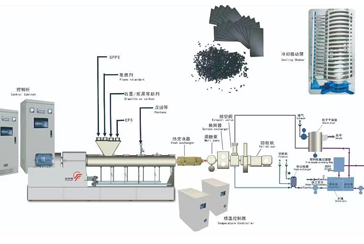
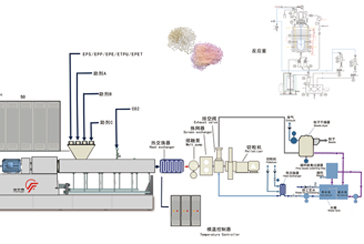
The process flow of producing graphite EPS (expandable polystyrene) by extrusion is to melt and mix polystyrene-based raw materials through extrusion equipment, then cut into the required particles through high-pressure underwater pelletizing, and finally carry out sieving, coating and packaging to obtain products. The specific steps are as follows:
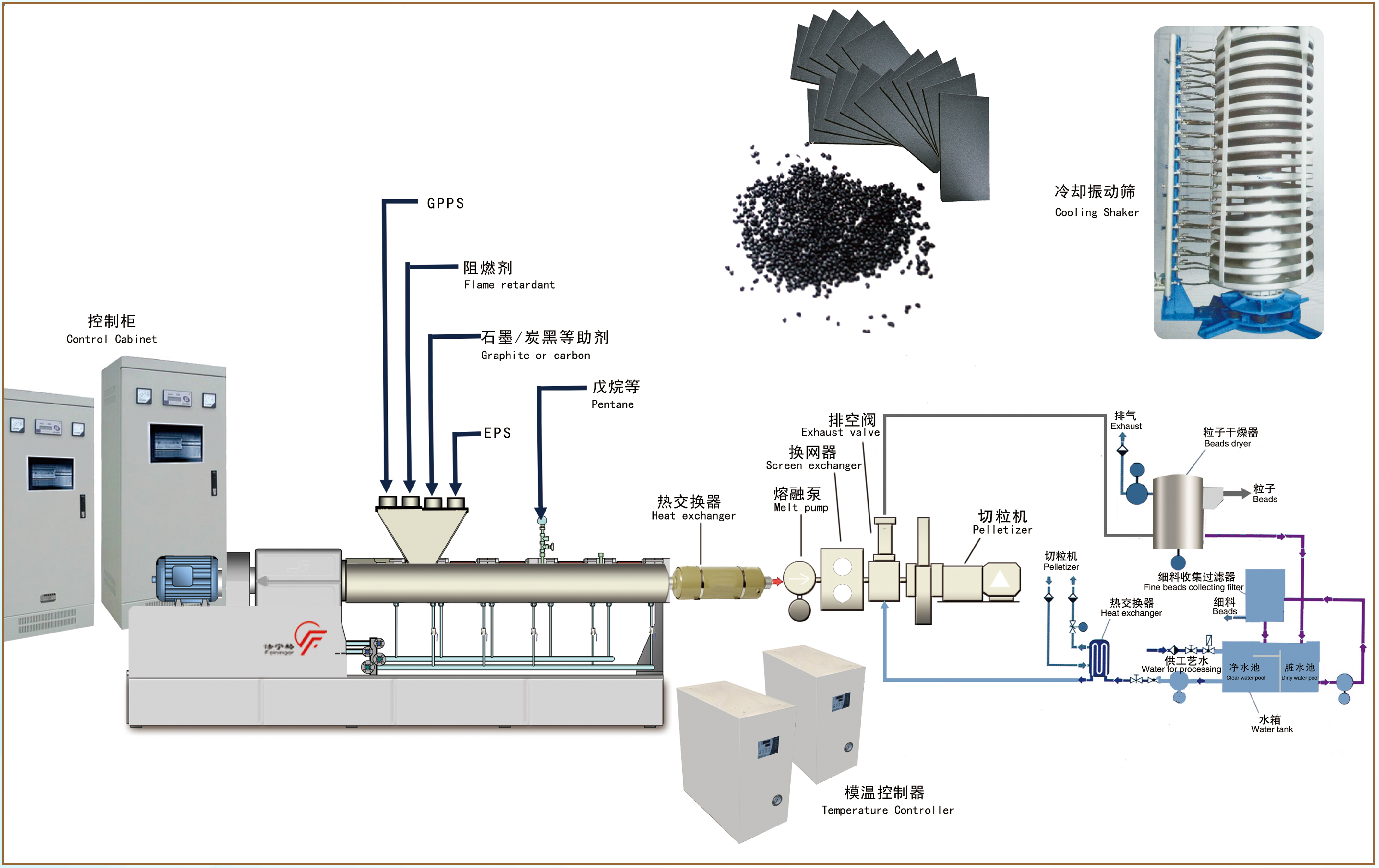
1. Raw materials
Main raw materials: including polystyrene resin particles, flake graphite, thermal insulation enhancement), foaming agent (pentane, etc.), additives (antioxidants, lubricants, flame retardants, etc.).
2. Mixing and plasticizing
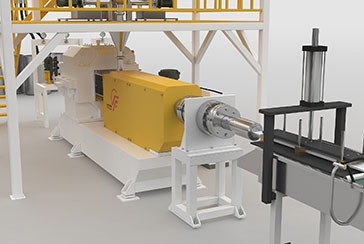
Put polystyrene resin, graphite, and other additives into the extruder in proportion. The temperature of the extruder is controlled at 180-200°C. The raw materials are sheared by the screw to form a uniform melt. After the melt enters the mixing section of the extruder, the liquid foaming agent pentane is injected into the melt through a metering pump, and is fully mixed and dissolved with the melt to form a homogeneous melt containing the foaming agent.
3. Melt filtration, temperature homogenization and transportation
The melt containing the foaming agent is pushed to the screen changer by the screw, and the tiny impurities in the melt are removed through the screen changer's filter. The filtered melt enters the melt heat exchanger, and through the precise temperature control of the mold temperature machine, the mixed melt is adjusted to the appropriate process temperature range. The homogenized mixed melt will be quantitatively transported to the high-pressure underwater pelletizer by the melt pump.
4. Pelleting and dehydration
The underwater pelletizer has a specially designed die head and cutter. The molten material passes through the small holes of the underwater pelletizing die and is cut into fine particles by the high-speed cutter. The high-pressure circulating water instantly cools and shapes the particles, and the foaming agent is also firmly locked inside the particles. The particles are transported by the water flow to the dehydrator section, where water and particles are separated by centrifugation.
5. Screening coating packaging
The particles are further dried and lifted in space through the elevator, and then enter the screening system to screen the required particle size. For the convenience of subsequent processing. The screened particles also need to be specially stirred and coated with a layer of lipid blend. Finally, it is sealed and packaged in a packaging bag with an inner bag.
Mobile Phonel: +86-13776668008
Email: market@feininger.cn
Website: http://www.xpsmachine.com/
Address: No.2 Zhonglin Road,TangshanIndustry Area,Nanjing City, JiangsuProvince,China
Latest News
 28 May 2025
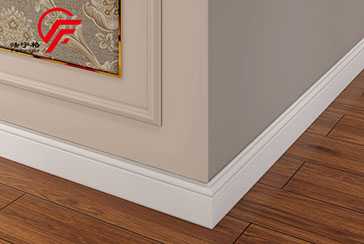
 Common Mistakes to Avoid When Operating a PS Skirting Production Line
In the world of interior and exterior decoration, PS skirting boards have become a preferred choice due to their lightweight nature, aesthetic versatility, and ease of installation.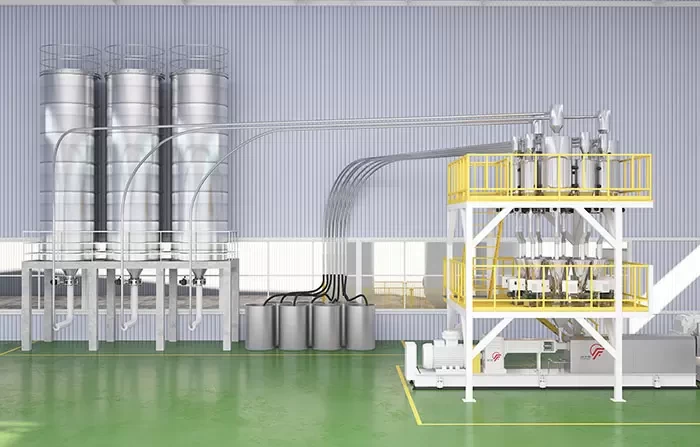 09 May 2024
 A Deep Dive into the Efficiency of CO2 XPS Production Lines
In the ever-evolving landscape of industrial manufacturing, the push towards more sustainable and efficient production methods has led to significant advancements in various technologies. One such innovation is the CO2 XPS production line. 15 Sep 2023
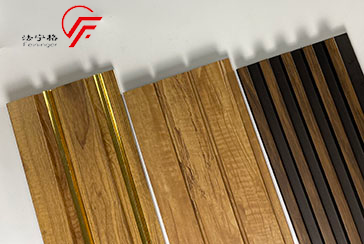
 Advantages of PS Decorative Lines for a Livable Home
To create an environmentally friendly and worry-free living space, we must be discerning when selecting materials for our home decor. In this regard, PS (Polystyrene) decorative lines offer numerous advantages that contribute to the overall livability of our homes.





 Leave a Message