Technology
27
Aug . 2025
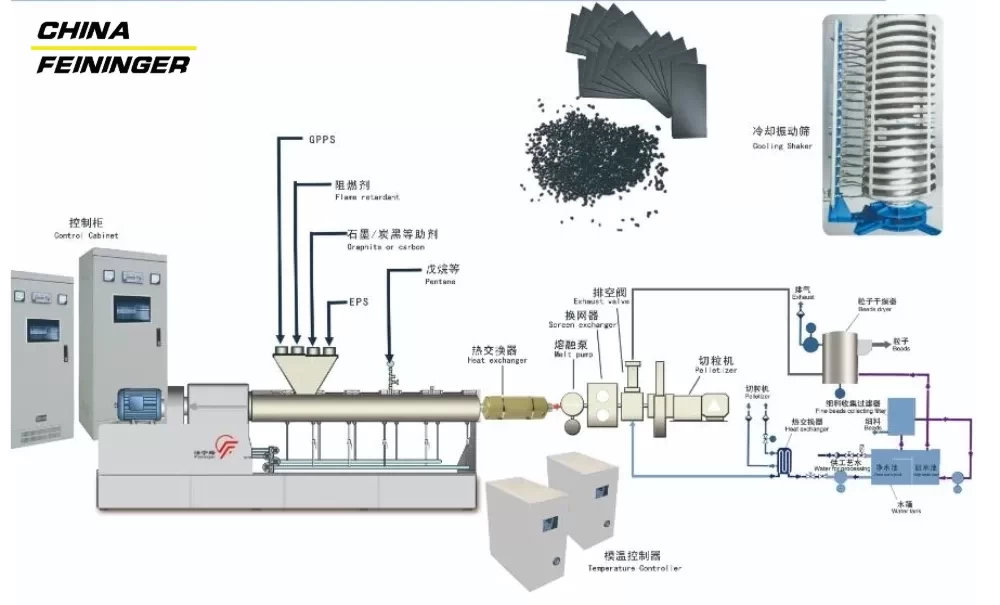
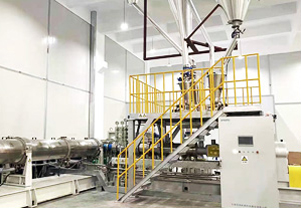
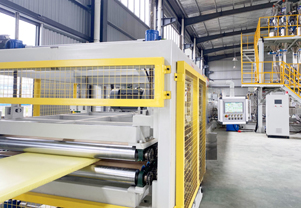
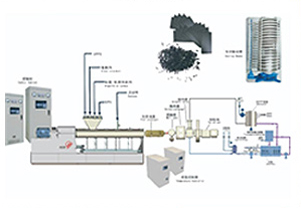
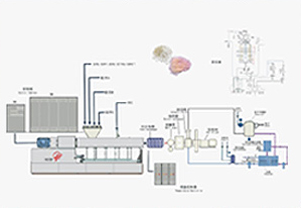
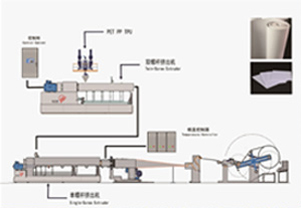
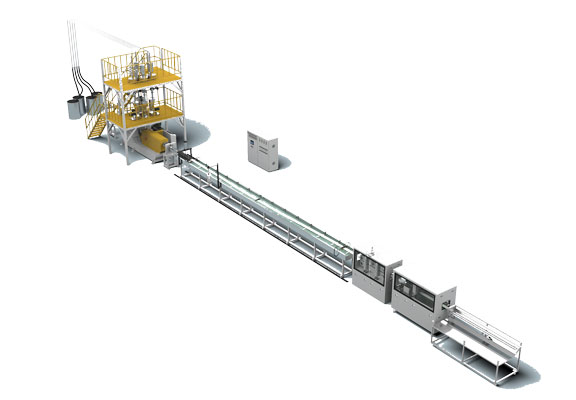
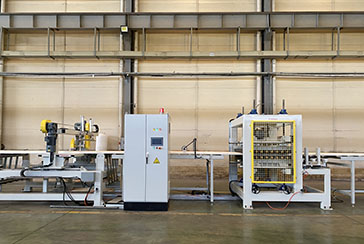
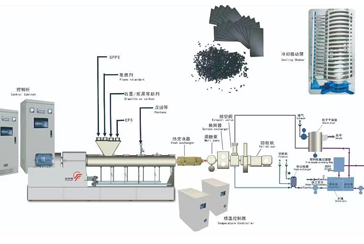
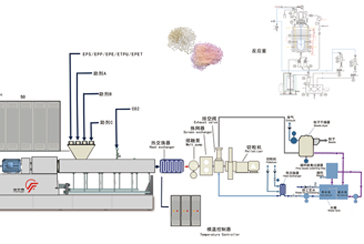
The process flow of producing graphite EPS (expandable polystyrene) by extrusion is to melt and mix polystyrene-based raw materials through extrusion equipment, then cut into the required particles through high-pressure underwater pelletizing, and finally carry out sieving, coating and packaging to obtain products. The specific steps are as follows:
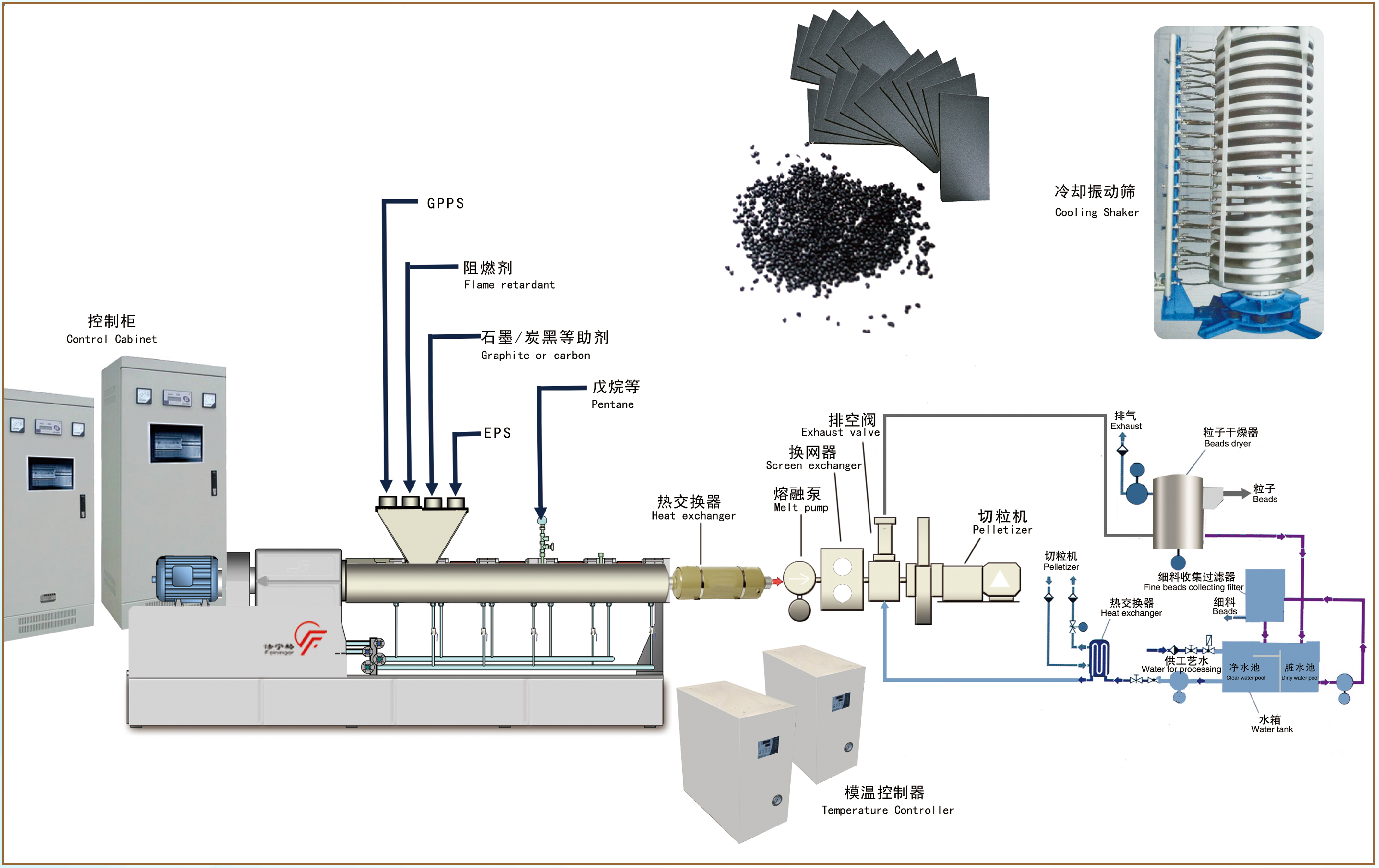
1. Raw materials
Main raw materials: including polystyrene resin particles, flake graphite, thermal insulation enhancement), foaming agent (pentane, etc.), additives (antioxidants, lubricants, flame retardants, etc.).
2. Mixing and plasticizing
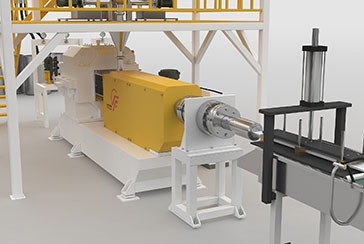
Put polystyrene resin, graphite, and other additives into the extruder in proportion. The temperature of the extruder is controlled at 180-200°C. The raw materials are sheared by the screw to form a uniform melt. After the melt enters the mixing section of the extruder, the liquid foaming agent pentane is injected into the melt through a metering pump, and is fully mixed and dissolved with the melt to form a homogeneous melt containing the foaming agent.
3. Melt filtration, temperature homogenization and transportation
The melt containing the foaming agent is pushed to the screen changer by the screw, and the tiny impurities in the melt are removed through the screen changer's filter. The filtered melt enters the melt heat exchanger, and through the precise temperature control of the mold temperature machine, the mixed melt is adjusted to the appropriate process temperature range. The homogenized mixed melt will be quantitatively transported to the high-pressure underwater pelletizer by the melt pump.
4. Pelleting and dehydration
The underwater pelletizer has a specially designed die head and cutter. The molten material passes through the small holes of the underwater pelletizing die and is cut into fine particles by the high-speed cutter. The high-pressure circulating water instantly cools and shapes the particles, and the foaming agent is also firmly locked inside the particles. The particles are transported by the water flow to the dehydrator section, where water and particles are separated by centrifugation.
5. Screening coating packaging
The particles are further dried and lifted in space through the elevator, and then enter the screening system to screen the required particle size. For the convenience of subsequent processing. The screened particles also need to be specially stirred and coated with a layer of lipid blend. Finally, it is sealed and packaged in a packaging bag with an inner bag.
Mobile Phonel: +86-13776668008
Email: market@feininger.cn
Website: http://www.xpsmachine.com/
Address: No.2 Zhonglin Road,TangshanIndustry Area,Nanjing City, JiangsuProvince,China
Latest News
 27 Jun 2024
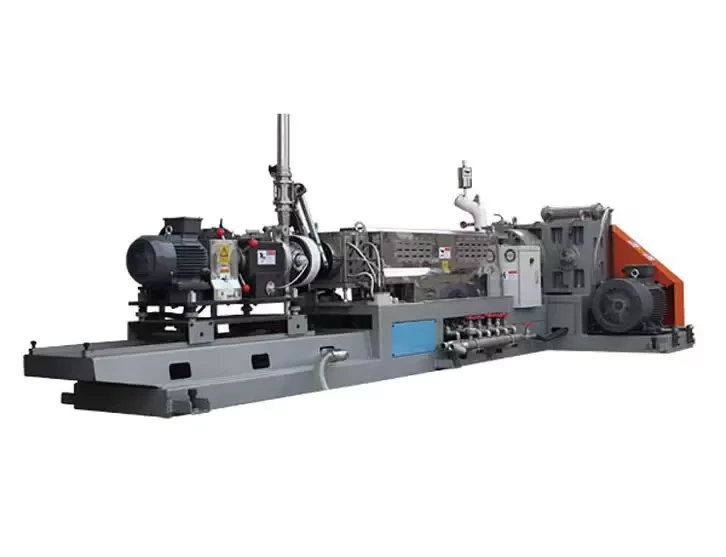
 Choosing the Right TPU Underwater Pelletizer for Your Manufacturing Needs
In the realm of polymer processing, selecting the appropriate equipment can significantly impact efficiency, product quality, and overall operational costs. When it comes to TPU (Thermoplastic Polyurethane) underwater pelletizers, making an informed decision is crucial to meeting production goals effectively.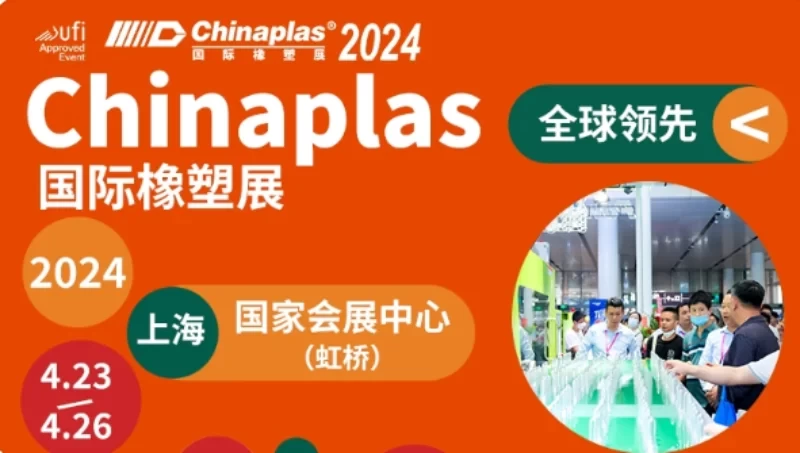 10 Apr 2024
 China Feininger to Showcase Cutting-Edge XPS Foam Solutions at Chinaplas 2024
China Feininger, the pioneer in XPS Foam technology and equipment manufacturing, is set to participate in the prestigious Chinaplas 2024, the 36th China International Plastics and Rubber Industry Exhibition.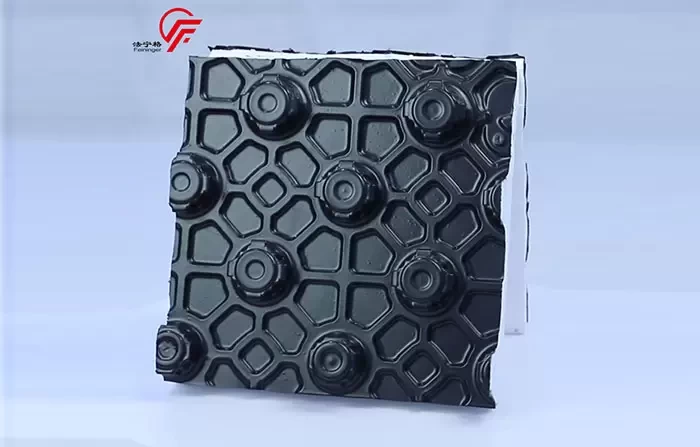 14 Jan 2025
 How EPS Floor Heating Sheets Can Save You Money on Energy Bills
As energy costs continue to rise, homeowners and businesses alike are seeking innovative solutions to reduce their utility bills. One such solution that has gained popularity in recent years is EPS floor heating sheets.





 Leave a Message